


When requesting a machining quotation, you have likely encountered the term「Machining rate」.
In this article, we will explain the definition of the machining rate, its relationship to machining costs, typical market rates, and the factors that influence pricing. We will also cover practical ways to minimize machining costs and key points to consider when requesting quotations. We hope this guide will help you better understand the cost structure of machining services and make more informed supplier selection decisions.
Contents
- What is machining rate?
- The typical machining rate?
- How to minimize machining costs?
- Quotation requests are essential for understanding machining rates!
- Conclusion
What is machining rate?
Machining rate refers to the hourly processing rate incurred when machining materials or components using machine tools. It is an important indicator used to calculate manufacturing costs, prepare machining quotations for customers as well as evaluate project performance after production is completed.
By combining the machining rate with「machining man-hours」, which indicate the workload required to complete production, the total machining cost can be determined.
Machining cost calculation formula
Machining cost = Machining rate × Machining man-hour
Machining expenses
Machining costs are basically composed of three main components:「Material costs」, 「machining costs」, and 「special processing costs」.
- Material costs
Material cost refers to the cost of the material itself used in the machining process. Common materials include steel, stainless steel, and magnesium, among others. Material costs are typically expressed as a unit price per kilogram. In addition, when materials are purchased in large quantities, procurement costs can often be reduced through bulk purchasing. As a result, the material cost per kilogram also tends to decrease.
- Machining cost
Machining cost refers to the cost incurred when performing machining operations on a material. It is generally calculated by multiplying the machining rate by machining man-hour. Since both the machining rate and machining man-hours are influenced by various factors, machining costs can vary considerably from one supplier to another.
- Special processing costs
Special processing costs refer to expenses incurred for additional treatments such as plating, coating, polishing, and heat treatment applied to a material to enhance its properties and performance. Although the difference in special processing costs among suppliers is generally not significant, additional subcontracting costs may arise if the selected supplier is unable to perform the required process in-house.
The typical machining rate?
The typical machining rate ranges from approximately $9.6 – $11.5 per hour (based on market rates in Vietnam). However, in practice, the actual machining rate varies depending on factors such as the initial investment cost of machinery, operating costs, and the machining method used. For example, machining with a 5-axis machining center requires a high level of operator skill. As a result, the typical machining rate for this type of operation is said to be around $38.5 per hour.
Since actual machining rates do not always match typical market rates, it is important to verify them each time a quotation is requested.
Why do typical machining rates differ?
Typical machining rates are influenced not only by the equipment and machining method used, but also by various other factors. The following three factors have the greatest impact on machining rates.
- Differences across industries
The manufacturing sector includes various industries such as metal processing, automotive manufacturing, and precision equipment manufacturing. Differences in machining accuracy requirements and production equipment are among the reasons why machining rates vary across industries. For example, in the automotive industry, production lines are highly automated, enabling machining operations to be carried out efficiently. On the other hand, many companies in the metal processing industry combine machine operations with manual work. As a result, machining rates tend to be higher.
- Differences based on company size
Differences in company size between large corporations and small and medium-sized enterprises can also contribute to variations in machining rates. Large companies often benefit from economies of scale when purchasing materials. In addition, their machine tools tend to achieve higher utilization rates due to a stable flow of production orders. As a result, they can remain profitable even while offering lower machining rates. In addition, large companies generally have greater financial resources for capital investment, allowing them to utilize highly efficient machine tools. This is another advantage that helps improve productivity and reduce manufacturing costs. On the other hand, small and medium-sized enterprises often have fewer opportunities to benefit from economies of scale and large-scale equipment investments. As a result, their machining rates may be higher than those of large companies.
- Regional differences
Machining rates are also influenced by regional differences. One of the main reasons is labor cost variation. Labor costs tend to be higher in urban areas, while they are generally lower in rural regions. Since labor expenses are a key component of machining rates, this results in differences in pricing across locations. In addition, logistics and transportation costs can also affect machining rates in certain situations.
Furthermore, becausecost calculation methods vary among suppliers, machining rates often differ from one company to another. Therefore, when evaluating machining quotations, it is important to consider the underlying factors that influence pricing.
How to minimize machining costs?
To minimize machining costs as much as possible, it is important to review not only the machining rate but also the other costs involved in the manufacturing process. The following section explains three key points that should be reviewed before placing a machining order in order to optimize costs and improve overall production efficiency.
Optimize initial costs
When requesting machining services, the initial cost typically includes the cost of preparing machining drawings.
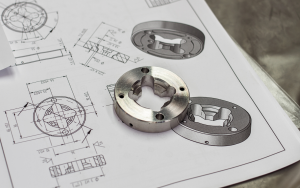
A machining drawing contains the information required to manufacture and process a part. If the supplier is responsible for creating the drawing in addition to machining the part, the initial project cost may increase. If your company can prepare drawings in-house using 2D CAD or 3D CAD software, it is advisable to provide them directly to the supplier. This can eliminate drawing preparation costs and help reduce upfront expenses.
In addition, simplifying the design can further reduce machining costs.
Optimize material costs
Material costs are generally determined by the type of material used, so price differences between suppliers are often limited. As a result, material costs are typically difficult to reduce significantly.
However, if a company procures and supplies the material itself, the material cost can be excluded from the machining quotation. If your company already procures materials and can obtain them at a lower cost, it may be worth considering supplying the materials directly to the machining supplier.
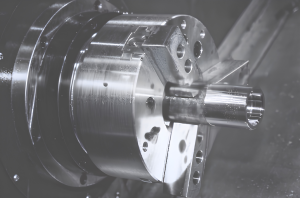
When supplying materials, it is important to account not only for the finished part dimensions but also for the「gripping allowance」required to secure the workpiece and the「machining allowance」that will be removed during processing. For parts with complex geometries, the supplier may specify minimum gripping dimensions or additional stock material requirements. Therefore, if you plan to provide your own materials, it is recommended to consult with the machining supplier in advance.
Obtain quotations from multiple suppliers
Since machining costs can vary significantly among suppliers, it is advisable to obtain quotations from multiple companies. Comparing several quotations makes it easier to determine「which supplier can offer the most competitive and suitable pricing」.
However, if a quotation is unusually low, it should be reviewed carefully, as it may involve quality-related risks. Therefore, in addition to comparing prices, it is important to understand:「Which cost items and factors are responsible for the price differences?」. For example, suppliers that use CNC machining centers with well-optimized machining programs may be able to offer lower machining costs while maintaining product quality.
Quotation requests are essential for understanding machining rates!
Machining rates vary depending on a wide range of factors, making it difficult to estimate actual machining costs without obtaining quotations. In addition, relying on a quotation from a single supplier may not provide enough information to determine whether the price is reasonable. Therefore, it is advisable to request and compare quotations from multiple suppliers.
A quotation typically contains information such as the machining method, materials used, inspection procedures, and estimated lead time. Obtaining a quotation is important not only for understanding costs, but also for evaluating whether the supplier has sufficient technical expertise and manufacturing experience for the required process, as well as confirming whether quality inspections will be carried out after machining. For these reasons, obtaining quotations is an important step in selecting the right machining partner.
Moreover, when requesting machining quotations, companies are generally required to provide machining drawings that specify dimensions and technical requirements. If drawing preparation must be outsourced, both costs and lead times may increase. Therefore, whenever possible, it is recommended to prepare drawings in-house to reduce costs and shorten project lead times.
Conclusion
Machining rate is the hourly cost used as a key indicator for calculating manufacturing costs, preparing quotations, and evaluating project performance. Machining cost can be calculated using the basic formula:「Machining rate × machining man-hour 」and it can vary significantly depending on factors such as equipment, machining method, geographical location, and company size.
To minimize machining costs, companies should review their initial expenses and obtain quotations from multiple suppliers. Requesting quotations is essential for accurately understanding actual machining costs. Rather than relying on a single quotation, it is important to compare multiple offers before making a decision. By gaining a proper understanding of machining rates and evaluating quotations effectively, manufacturers can establish a more efficient production process while minimizing unnecessary costs.
If you have any requirements for machined parts procurement, please feel free to contact Agency Assist Vietnam.
All machined components undergo thorough inspection at our Quality Control Center to ensure high-quality parts that fully comply with drawing specifications. Simply send your drawings Here, Agency Assist Vietnam will provide a quotation on the same day. Please feel free to contact us for consultation and support.