

Turning machining is an essential manufacturing process for achieving high-precision machining of materials such as metals and plastics. It is widely used in manufacturing industries as well as in prototyping and product development. However, many people find it difficult to understand「How machining costs are calculated」. When the factors that determine pricing are unclear, it can become more challenging to manage budgets and select the right machining supplier.
This article provides a detailed explanation of the key factors that influence turning machining costs and how each factor affects the final price. In addition, we will also introduce practical ways to reduce costs without compromising quality, as well as important points to consider when selecting a machining supplier. We hope you will find this information useful.
Contents
- What is turning machining?
- How turning machining costs are determined?
- Ways to reduce turning machining costs
- Conclusion
What is turning machining?
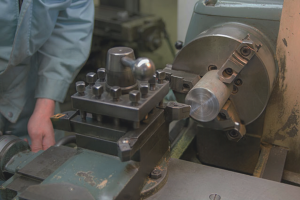
Turning machining is a type of machining process in which a cutting tool removes unnecessary material from a workpiece to achieve the desired shape. In turning operations, the workpiece itself rotates while the cutting tool performs the machining, making this process particularly suitable for manufacturing cylindrical and rotationally symmetrical components.
The main advantages of turning machining are as follows:
- High-precision machining can be achieved with ease
- Compatible with a wide variety of materials
- Well suited for small-lot and low-volume production orders
In turning machining, an NC unit is used to control the movement of cutting tools through programming, enabling high-precision machining with an accuracy of approximately 0.001mm. Turning machining is also compatible with a wide range of metal and plastic materials, making it suitable for manufacturing products in various industries, from automotive components to precision equipment.
How turning machining costs are determined?
The cost of turning machining varies depending on factors such as material cost, machining time, required accuracy, and tolerance, and is calculated according to the pricing standards and policies of each machining supplier. By understanding the key factors that influence turning machining costs and how prices are determined, you can achieve the desired machining results while staying within your budget.
Material costs
The type of material used in turning machining and whether a Mill sheet (Material certificate) is required are important factors that influence machining costs. In general, selecting materials with higher procurement costs, such as aluminum alloys or brass, will increase the overall machining cost. The same applies to high-hardness materials such as titanium. On the other hand, materials such as steel, stainless steel, and wood are relatively inexpensive to procure, making it easier to keep machining costs under control.
Some machining suppliers also accept customer-supplied materials. Supplying your own materials can help reduce material costs. However, it is important to note that additional fees may apply in some cases.
Machining time
Machining time is also taken into account when calculating turning machining costs. This is because complex machining operations often require longer processing times, resulting in higher labor costs. For example, radius machining (R-machining), which rounds off edges and corners, is more difficult than chamfering (C-machining), which creates a 45-degree beveled edge. As a result, additional labor costs may be reflected in the final machining price.
Another reason machining time is considered when calculating turning machining costs is that complex machining processes may require the machine to operate multiple times. Running the machine through multiple operations increases not only utility costs but also cutting fluid consumption. As a result, machining costs tend to be higher.
Precision・Tolerance
Machining accuracy requirements, such as dimensional tolerances and angular tolerances, are also taken into account when determining turning machining costs. For example, the workload required for a product with a dimensional tolerance of 0.3mm differs significantly from that of a product with a tolerance of only 0.01mm. As a result, machining costs vary accordingly.
In reality, highly precise machining processes cannot necessarily be outsourced to every machining supplier. When the choice of suppliers is restricted, customers may be quoted higher prices than usual.
Quantity
In general, the larger the order volume for products with the same specifications, the lower the machining cost per unit, resulting in better cost efficiency. This is because NC lathes can use a single program to mass-produce parts with identical specifications, reducing the machining cost of each individual product. On the other hand, low-volume orders involving a wide variety of products require multiple programs and machine setups, increasing preparation time and production costs. As a result, cost efficiency decreases.
Lead time
Lead time is also an important factor that affects turning machining costs. For urgent orders that require expedited processing and short delivery times, many machining suppliers charge additional fees on top of the standard machining cost, which can significantly increase the overall expense. This is because suppliers may need to adjust production schedules, rearrange workflows, or perform overtime work in order to prioritize the order and meet the required delivery deadline.
In contrast, for projects with more flexible lead times, manufacturers can optimize production schedules and carry out operations more efficiently. As a result, the more flexible the lead time, the lower the machining cost tends to be.
Surface treatment
The presence and type of surface treatment also affect machining costs. Surface treatment refers to the application of special processes to a material’s surface in order to improve its strength, durability, corrosion resistance, wear resistance, or appearance. The following are some representative surface treatment methods that can be applied to turned parts.
- Plating
- Chemical conversion coating
- Anodizing
- Coating/ Painting
- Polishing
- Blasting
Since each of the surface treatment methods listed above adds additional processing costs, the overall machining cost tends to be higher.
Ways to reduce turning machining costs
Turning machining costs can be reduced by optimizing the design, carefully selecting materials, and consulting or negotiating with machining suppliers. Since pricing structures vary from one supplier to another, costs can also be reduced by choosing a supplier that offers the most favorable conditions. The following sections explain in greater detail the key strategies for reducing turning machining costs.
Optimize the design
Costs can be reduced by reviewing machining accuracy requirements during the design stage and relaxing them where possible. If there is no specific reason to impose strict standards for dimensional accuracy or geometric accuracy, it is advisable to remove unnecessary special specifications and adopt standard tolerances instead. When no specific tolerances are indicated, general tolerances are typically applied, ensuring an adequate level of product quality.
However, depending on the application, there are cases where strict, custom machining requirements are necessary. Therefore, it is important to apply the appropriate level of specification based on the actual needs of the product. Reducing machining accuracy requirements may increase the likelihood of dimensional variations after assembly. For this reason, designers should carefully evaluate the required level of accuracy during the design stage and optimize specifications accordingly. Striking the right balance between accuracy and cost is key to achieving high-quality results while keeping machining costs under control.
Optimize material selection
A wide variety of materials can be used in turning machining. Machining costs can be reduced by switching to materials with lower procurement and machining costs, provided that the required product performance is maintained. Material procurement costs are influenced by availability and market supply. As a result, selecting materials that are not commonly available in Vietnam can increase costs due to sourcing difficulties and limited supply. In many cases, machining costs are proportional to a material’s hardness and machinability. Therefore, material selection should be made with careful consideration of the balance between performance requirements and cost.
If you are unsure about which material to choose, it is a good idea to consult the machining supplier during the quotation stage. Selecting the right material based on professional advice can help achieve high-quality results at a lower cost.
Reduce the number of components
Although integrating multiple parts into a single component can reduce the number of parts, the integrated component may require stricter geometric tolerances. As a result, while it can improve accuracy and consistency, it does not necessarily lead to lower manufacturing costs.
For some products, cost reduction can be achieved not by reducing the number of components, but by changing the manufacturing method itself or utilizing alternative solutions such as welding. If you are unsure which machining method to choose, consulting a machining supplier and seeking professional advice is recommended.
Choose the right supplier
When outsourcing turning machining, it is advisable to request quotations from multiple suppliers and compare their proposals to select the most cost-effective partner. Even for the same machining requirements, pricing and lead times can vary from one supplier to another. By obtaining proposals from multiple suppliers and understanding the market price range before negotiating, price discussions can be carried out more smoothly.
However, evaluating a supplier solely based on price may increase the risk of compromising the quality of the finished product. When choosing a trustworthy machining partner, pay attention to their production experience, customer support, and technical expertise.
Conclusion
Turning machining costs are determined by a variety of factors, including material costs, machining time, accuracy and tolerances, order quantity, lead time, and surface treatment requirements. Because each of these factors is heavily influenced by the product’s specifications and intended application, understanding the cost structure is essential for avoiding unnecessary expenses and optimizing the manufacturing budget. In addition, costs can often be reduced through improvements made during the design stage, such as selecting more cost-effective materials or reducing the number of components in the product.
Learn more about our turning machining capabilities Here
At Agency Assist Vietnam, our professional sales team handles the entire procurement process on behalf of our customers, providing a convenient and hassle-free experience!
With more than 30 years of procurement experience and a network of more than 100 partner manufactures, Agency Assist Vietnam can source a wide range of parts through a one-stop solution, from preparing materials, processing to surface treatment, helping customers achieve greater efficiency and cost-effectiveness.
We support order from single-piece to low-volume and high-mix production.
All products are inspected by our in-house quality control team before delivery to ensure consistent quality.
Send your drawings Here for a quick quotation.