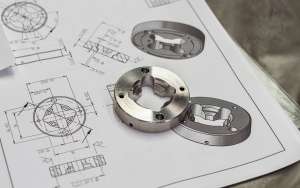



When sourcing metal components, it is common to obtain quotations from multiple manufacturers.
Many customers wonder why quotation prices can vary significantly among suppliers even for same requirements.
Quotation cost is one of the most important factors that need to be considered when choosing supplier.
In this article, we will explain the structure of component manufacturing quotations and provide a detailed breakdown of the key cost items included in the quotation.
Contents
- Why do quotation prices differ for the same requirements?
- A quotation consists of various cost components
- Points to consider when requesting a quotation
- About Agency Assist Vietnam’s quotation
- Conclusion
Why do quotation prices differ for the same requirements?
Even when the same drawing is submitted for quotation, the quoted cost may vary from one manufacture to another. One of the main reasons is that machining costs differ among suppliers due to variations in machining rates and estimated processing time.
In addition, if quotations are requested at different times, fluctuations in raw material prices may also contribute to differences in the quoted cost.
If you are wondering whether a quotation reflects a reasonable price, understanding the structure and cost breakdown of a quotation can be very helpful.
A quotation consists of various cost components
The cost of manufactured components is influenced by many factors, some of which may not be immediately apparent from the quotation itself. Normally, the cost breakdown may include material costs, labor costs and overhead expenses. Depending on the processing requirements, the quotation may also include subcontracting costs (Surface treatment, heat treatment and other special processing operations).
Although each company may have its own pricing policies, the basic structure and principles of manufacturing quotations are generally similar across suppliers.
In the following sections, we will explain the main cost components typically included in a component manufacturing quotation and examine each item in detail.
Material cost
Material cost refers to the cost of the raw material used to manufacture the component. Because material prices are subject to market fluctuations, the cost is not always the same, even when the same material grade is used.
In general, suppliers procure material at the minimum size required to manufacture the part specified in the drawing. For round bars, only the required length can be cut and used, so suppliers often keep standard-length stock on hand. In contrast, for milling materials such as plates or blocks, pre-purchased stock may not always be large enough to accommodate the required dimensions. As a result, materials are often purchased after an order is received to ensure the appropriate size is available.
Material prices have continued to rise in recent years, leading many companies to reassess their component manufacturing suppliers in an effort to control procurement costs.
Processing cost
Processing cost accounts for a significant portion of the total component manufacturing cost.
Processing cost is calculated by multiplying the machining rate by the processing time, as shown in the following formula:
Processing cost = Machining rate × Processing time(hour)
The machining rate includes expenses such as equipment operating costs and labor costs on a daily or hourly basis.
Because machining rates and estimated processing times vary from one company to another, quotation prices may differ even when the same specifications and requirements are provided.
There is often more than one way to manufacture a component. Depending on factors such as material properties, dimensional tolerances, and performance requirements, it is necessary to select the most appropriate machining method. For example, the quotation cost can differ significantly between conventional machining and wire EDM (Electrical Discharge Machining). In addition, it is important to consider whether the required strength and performance can only be achieved through full machining or whether alternatives such as welding can be used.
From a labor cost perspective, manufacturing costs can often be reduced by outsourcing production to overseas suppliers, where equipment and labor costs may be lower.
→ However, since material specifications, product quality, and manufacturing standards may differ among suppliers, it is important to work with a reliable manufacturing partner.
Outsourced processing cost (Treatment cost)
Outsourced processing costs are incurred when additional operations beyond standard manufacturing are required. These costs typically arise when specialized processes cannot be performed in-house and must be outsourced to external suppliers such as heat treatment, surface treatment, plating, coating, and other specialized manufacturing processes.

It may be possible to reduce outsourced processing cost (treatment cost) by working directly with specialized suppliers for each process. However, this approach can also create additional responsibilities, such as supplier selection, quotation comparison, procurement management, production scheduling, quality control, … As a result, more time and effort may be required.
For parts that require multiple processes or additional treatments, procurement can become complex. Choosing a supplier that can handle everything from material sourcing and fabrication to surface treatment can help reduce management effort and simplify the entire procurement process.
Points to consider when requesting a quotation
When requesting a quotation, there may be cases where the specifications have not yet been finalized or the required quantity has not been determined. In such situations, suppliers may provide an estimated quotation or a lump-sum quotation based on the available information.
If the specifications change later or the required components differ from those originally assumed, the quotation cost will naturally change as well.
Therefore, it is advisable to finalize the specifications and required quantity before requesting a quotation whenever possible. If any changes are expected, be sure to communicate them to the supplier in advance so that the quotation can be reviewed and updated accordingly.
About Agency Assist Vietnam’s quotation
At Agency Assist Vietnam, quotations are prepared by our technical sales specialists, who possess extensive manufacturing know-how and strong drawing interpretation skills.
Regardless of the machining process or material type, we can provide a quotation simply by reviewing your drawings (we accept 2D, 3D drawings, and even hand-drawn sketches).
Because every drawing is reviewed by experienced personnel, we can communicate directly with customers to clarify missing dimensions, resolve technical questions, and address any other uncertainties before proceeding.
Conclusion
We have introduced the structure and detailed cost items of component manufacturing quotations.
By understanding the basic components of a quotation, it becomes easier to evaluate whether the quoted price is reasonable and to make more informed decisions when selecting a manufacturing supplier.
If there is anything you are unsure about, do not hesitate to consult the supplier’s representative and clarify any questions throughout the quotation and procurement process.
At Agency Assist Vietnam, our professional sales team handles the entire procurement process on behalf of our customers, providing a convenient and hassle-free experience!
With more than 30 years of procurement experience and a network of more than 100 partner manufactures, Agency Assist Vietnam can source a wide range of parts through a one-stop solution, from preparing materials, processing to surface treatment, helping customers achieve greater efficiency and cost-effectiveness.
We support order from single-piece to low-volume and high-mix production.
All products are inspected by our in-house quality control team before delivery to ensure consistent quality.
Send your drawings Here for a quick quotation.
About our Machining Technology List