

Stainless steel has various types with multiple characteristics and prices. For example, SUS304 is widely used in applications involving water exposure and food-processing applications due to its excellent corrosion resistance, but it is generally more expensive than other stainless steel grades. On the other hand, SUS430 has lower corrosion resistance than SUS304, but it is more cost-effective and widely used in a variety of applications. Therefore, to obtain the most cost-effective quotation, it is important to choose the right material based on required performance and budget.
In this article, we will explain stainless steel machining quotations in an easy-to-understand manner, focusing on types of raw materials, processing methods and their characteristics.
Contents
- Detailed structure of a stainless steel machining quotation
- Processing methods that affect stainless steel machining quotations
- Special processing methods that affect stainless steel machining quotations
- Conclusion
Detailed structure of a stainless steel machining quotation
Stainless steel is an alloy steel whose composition consists of more than 50% iron, containing at least 10.5% chromium. When exposed to air, chromium reacts with oxygen to form a thin and stable passive oxide layer on the surface, which provides excellent corrosion resistance and helps prevent rust formation.
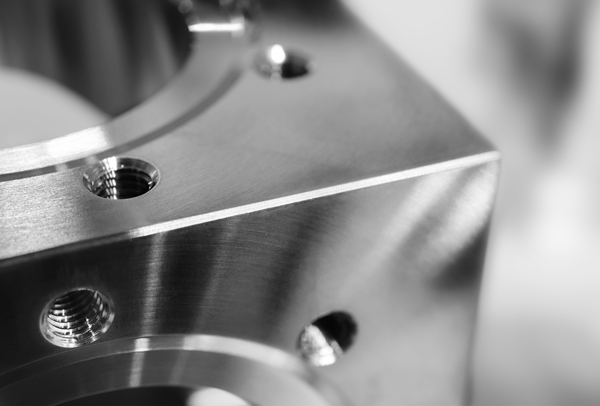
Typically, a stainless steel machining quotation includes the following cost components:
| Material costs | The material costs depend on the type and size of the stainless steel used, such as material thickness and dimensions, as well as prevailing market prices. Generally, the thicker the material and the more specialized the stainless steel grade, the higher the material cost. |
| Machining costs | This cost is calculated based on the machining workload and the machining rate (including expenses related to equipment, tooling, and labor). Machining costs tend to vary significantly among manufacturers. |
| Special machining costs | Special machining costs applies when surface treatments such as polishing, painting or plating are performed to improve the appearance or functionality of products. |
| Others | Including design costs (if required), packaging costs, shipping costs… |
Processing methods that affect stainless steel machining quotations
After selecting the appropriate stainless steel, it is necessary to choose a processing method that matches its characteristics. Stainless steel is available in a variety of grades, each with different properties such as hardness, ductility, corrosion resistance and weldability. As a result, the most suitable processing method will vary depending on the material selected.
Machining

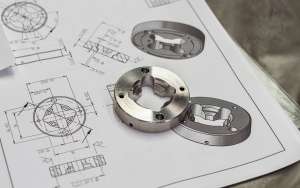
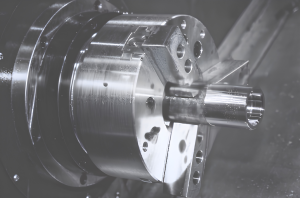
Machining is a process in which stainless steel is cut and shaped into the desired form using machine tools such as lathes, milling machines and machining centers.
Machining is classified as a material removal process. It offers relatively high machining accuracy and generates greater cutting force than grinding (another material removal process), making it well suited for producing the basic shape of a part. Grinding, on the other hand, is typically used as a finishing process when higher precision and better surface quality are required. In many applications, machining and grinding are used together to achieve both efficient material removal and high dimensional accuracy.
Due to relatively low thermal conductivity of stainless steel, heat generated during machining tends to concentrate around the cutting tool, causing tool wear to occur more rapidly. In addition, stainless steel is prone to work hardening (phenomenon the material becomes harder during the machining process). Therefore, careful selection of cutting tools and machining parameters is necessary.
Related article: “POINTS TO CONSIDER IN MACHINING QUOTATION TO REDUCE COST・NECESSARY PREPARATIONS BEFORE PROCESSING“
Cutting

Cutting is a process used to cut stainless steel into required size. In recent years, laser cutting, which uses a focused laser beam to cut the material with high precision, has become increasingly common.
In addition to laser cutting, other common cutting methods include shearing and plasma cutting. Shearing is a process in which sheet metal is placed between an upper blade and a lower blade and cut using shear force. The principle is similar to cutting paper with a pair of scissors. Plasma cutting uses a plasma arc to melt and cut metal. A plasma arc is a high-temperature ionized gas (plasma) generated through an electrical discharge process. Because of its extremely high temperature, it can efficiently cut electrically conductive materials such as stainless steel.
Bending
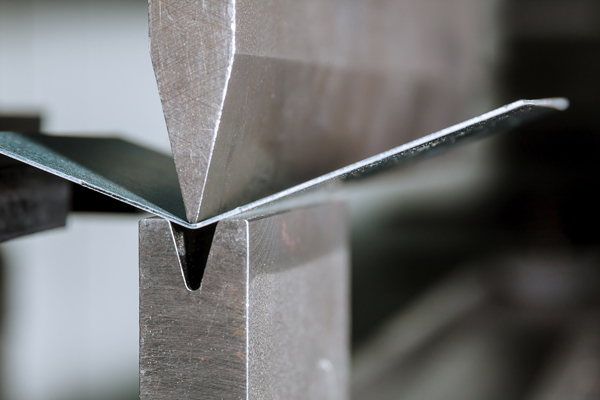
Bending is a forming process in which stainless steel is shaped by applying force with machines such as press brakes. Common bending methods include V-bending, L-bending, U-bending, Z-bending, O-bending, and R-bending.
For example, V-bending, one of the most common bending methods, uses a V-shaped die and a pointed punch to bend sheet metal into a V shape. L-bending is performed by holding the sheet metal in place while applying force with a tool called a punch, forming the material into an L shape. This method is particularly suitable for simple bending applications.
Welding
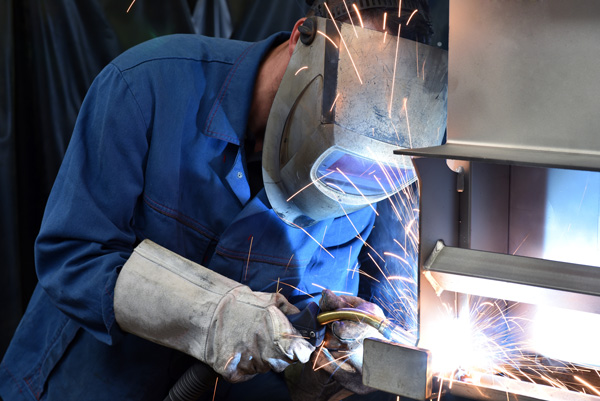
Welding is a fabrication process used to join two or more materials by melting and fusing them together. Common welding methods for stainless steel include MIG welding, TIG welding, laser welding, and shielded metal arc welding (SMAW).
For example, MIG welding uses an inert shielding gas to protect the weld area from atmospheric contamination while feeding a consumable metal wire that serves as both the electrode and filler material. Because of its high welding speed and productivity, MIG welding is widely used for stainless steel fabrication. TIG welding uses a non-consumable tungsten electrode and, when necessary, a separate filler material. Like MIG welding, it employs shielding gas to protect the weld area. However, TIG welding is known for producing cleaner, more precise welds with superior appearance, making it suitable for applications that require high-quality finishes and accuracy.
Press forming
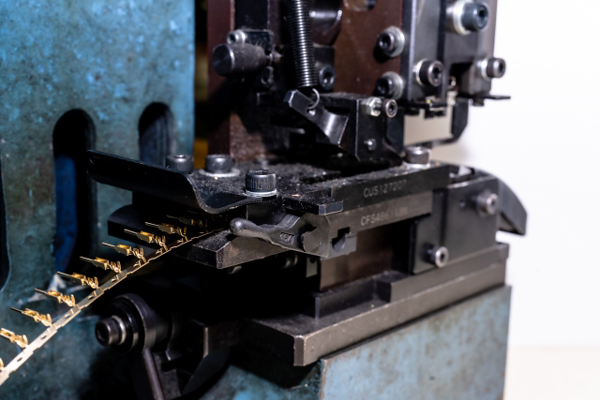
Press forming is a manufacturing process in which pressure is applied to a material using dies and presses to shape it into the desired form.
Press forming can be broadly classified into three main categories based on the type of stress applied to the material: Deep drawing, stretch forming, and bending.
Deep drawing is a forming process in which the material is subjected to tensile stress in the drawing direction and compressive stress in the circumferential direction. It is commonly used to manufacture cup-shaped and cylindrical products. Stretch forming is a process in which only tensile stress is applied to the material, shaping it in a manner similar to inflating a balloon. Bending is a forming process that deforms the material by applying force to create an angle or curve. During bending, tensile stress acts on the outer side of the bend, while compressive stress acts on the inner side.
Special processing methods that affect stainless steel machining quotations
Stainless steel is well known for its excellent corrosion resistance. However, by applying surface treatments, its appearance and functional properties can be further enhanced. In general, the smoother the stainless steel surface, the better its corrosion resistance tends to be.
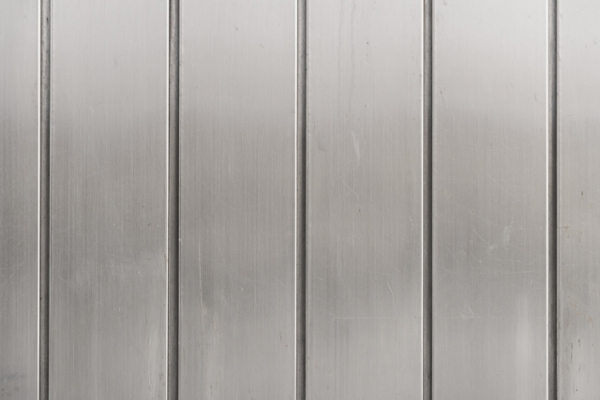
The following are some of the most common surface finishing methods used for stainless steel.
No. 1
No. 1 finish is a surface finish obtained after hot rolling, followed by annealing and pickling. It has a matte, silver-white appearance with a relatively rough surface texture. Because appearance is not a primary consideration, No. 1 finish is commonly used for structural components, industrial equipment, and base materials for further rolling and processing. In general, high surface smoothness and aesthetic quality are not required for these applications.
No. 2D
No. 2D finish is produced by cold rolling the stainless steel, followed by heat treatment and pickling. Compared with No. 1 finish, it has a smoother surface, but it exhibits little gloss and has a dull gray appearance. Because of providing a matte finish, No. 2D finish is well suited for applications where a low-gloss appearance is preferred.
No. 2B
No. 2B finish is produced by applying light cold rolling to a No. 2D finish, resulting in a smoother surface and a moderate level of gloss. Compared with No. 2D finish, No. 2B finish offers better surface smoothness and a slightly reflective appearance, and the majority of commercial stainless steel products are supplied with this surface treatment. Due to its versatility, No. 2B finish is also widely used in a variety of applications.
BA
BA finish (Bright Annealed) is produced by subjecting cold-rolled stainless steel to bright annealing, resulting in a smooth, highly reflective surface. Because it offers a glossy appearance that is close to a mirror finish, BA finish is commonly used for applications where appearance is important, such as household appliances, decorative products, kitchen equipment, and automotive components.
No. 4
No. 4 finish is produced by polishing the stainless steel surface with abrasive belts typically ranging from P150 to P180 grit. It is one of the most commonly used polished finishes, characterized by a moderate level of gloss and fine, uniform polishing lines. No. 4 finish is widely used in applications such as kitchen equipment, building materials, transportation vehicles, and medical instruments.
#400
#400 finish is a finer polished finish than No. 4 finish and is produced using a P400 buffing abrasive. It provides a high level of gloss that is close to a mirror finish, although slight polishing lines may still be visible. Compared with No. 4 finish, #400 finish offers a more refined and premium appearance. As a result, it is widely used for architectural materials, kitchen equipment, decorative applications, and other products where aesthetics are important.
HL (Hairline)
HL (Hairline) finish is a surface finishing method that creates long, continuous linear grain patterns through polishing. The surface is typically polished using abrasive belts ranging from P150 to P240 grit, resulting in a subtle, low-gloss appearance with an elegant and refined texture. HL finish is widely used in applications where aesthetics is important.
Conclusion
There are many factors that influence stainless steel machining quotations. One of the most significant factors is the type of stainless steel material used, including SUS403, SUS430, and SUS304.
Besides, surface finishing is another factor that affects stainless steel machining quotations. There are various types of surface finishes available, ranging from matte finishes such as No. 1 finish to moderately reflective finishes such as No. 2B finish. Obtaining quotations from multiple suppliers and comparing their pricing and capabilities can help you select the machining supplier that best meets your requirements.
At Agency Assist Vietnam, our professional sales team handles the entire procurement process on behalf of our customers, providing a convenient and hassle-free experience!
With more than 30 years of procurement experience and a network of more than 100 partner manufactures, Agency Assist Vietnam can source a wide range of parts through a one-stop solution, from preparing materials, processing to surface treatment, helping customers achieve greater efficiency and cost-effectiveness.
We support order from single-piece to low-volume and high-mix production.
All products are inspected by our in-house quality control team before delivery to ensure consistent quality.
Send your drawings Here for a quick quotation.
About our Machining Technology List