

Surface treatment is a type of manufacturing process typically performed in the final stage of production to enhance the surface properties of a material or improve its appearance. Surface treatment includes various methods such as polishing, plating, and anodizing.
In this article, we will introduce「Anodizing」- One of the most widely used surface treatment methods.
Contents
- What is Anodizing
- Principle of Anodizing
- Anodizing process
- Difference between Anodizing and Plating
- Types of Anodizing
- Advantages and disadvantages of Anodizing
- Conclusion
What is Anodizing
Anodizing is a surface treatment process that uses electrolysis to form a protective oxide layer on the surface of aluminum. Although aluminum is naturally covered by a thin oxide film, this natural layer is extremely thin and can be damaged by mechanical wear, chemicals, or environmental conditions, leading to corrosion. To protect the surface and improve corrosion resistance and durability, Anodizing is applied to aluminum products.
Principle of Anodizing
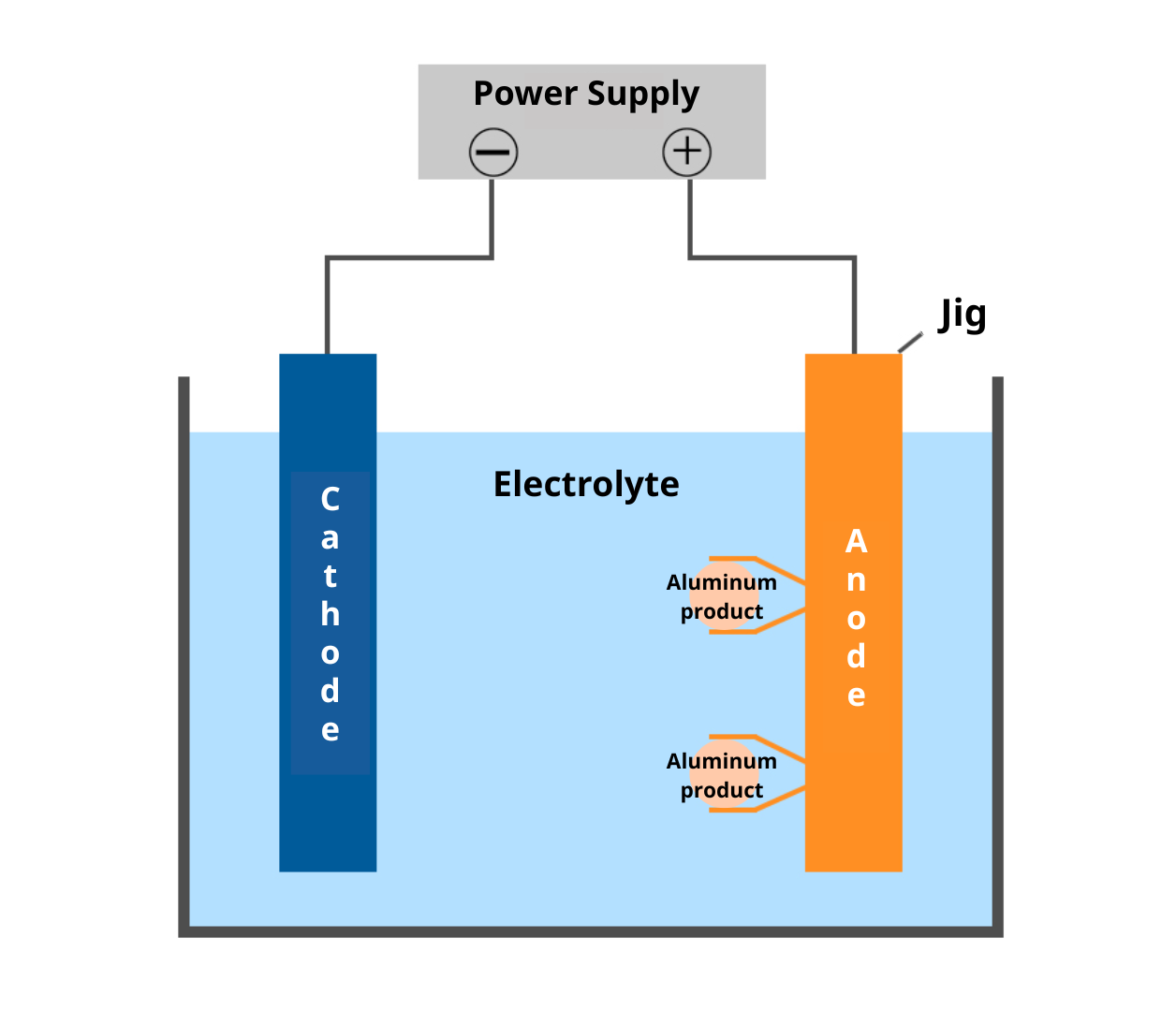
Anodizing is performed by immersing an aluminum product in an electrolyte solution and applying an electric current while the product acts the anode. When a direct current is applied, electrolysis takes place, and oxygen ions generated in the electrolyte react with the aluminum surface to form a durable aluminum code layer.
Anodizing process
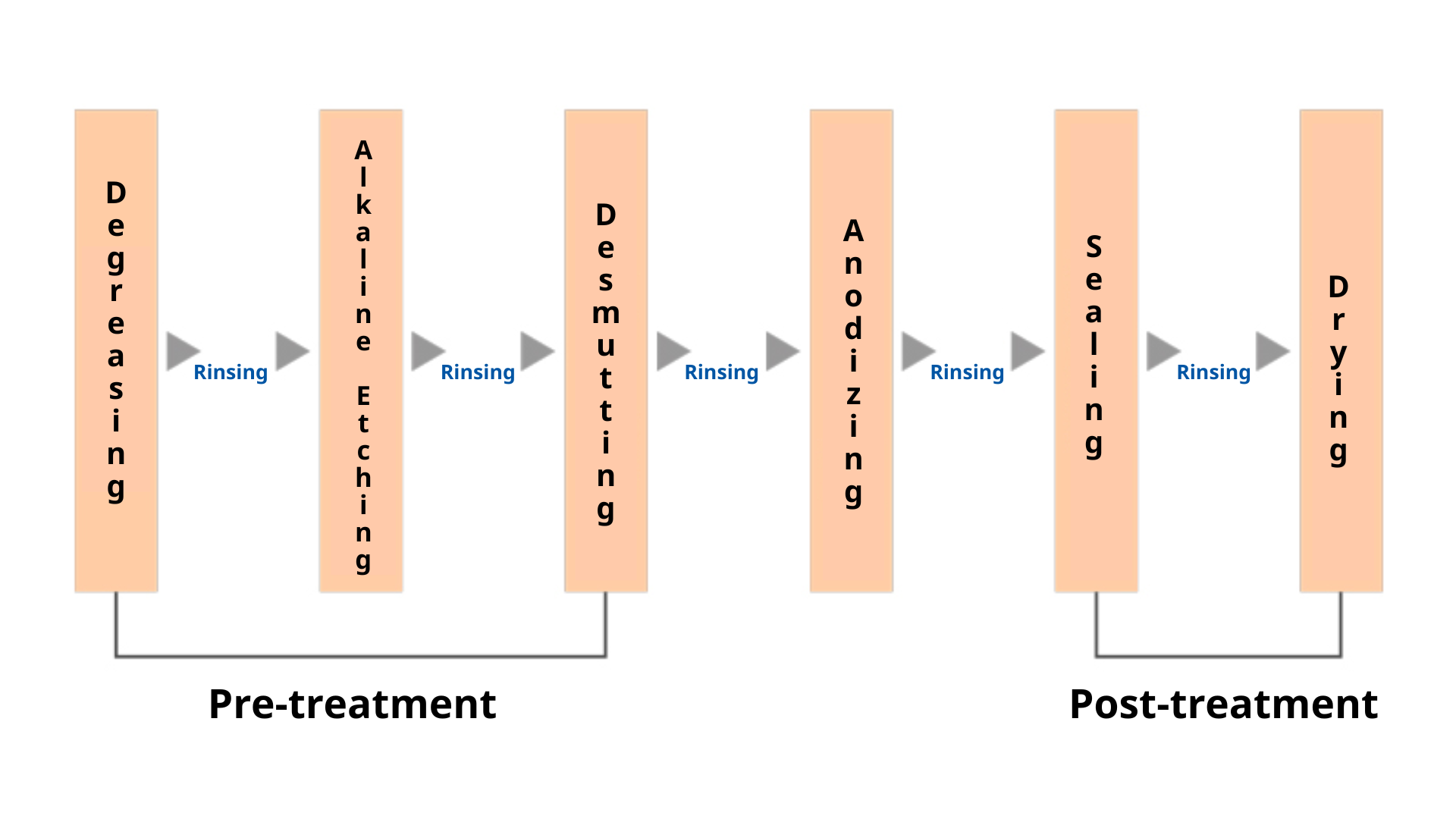
The anodizing process consists of three main stages: Pre-treatment, Anodizing, and Post-treatment.
Pre-treatment
<Step 1> Degreasing
Degreasing is the process of removing oil, grease, and dirt from the aluminum surface before anodizing.
▼ Rinsing
<Step 2> Alkaline etching
The aluminum surface is dissolved in an alkaline solution, such as sodium hydroxide, to remove scratches, surface imperfections, and residual oils that remain after degreasing.
▼ Rinsing
<Step 3> Desmutting
Removes impurities and residues remaining after etching by using an acidic solution.
▼ Rinsing
Anodizing
<Step 4> Anodizing
The aluminum product is immersed in an electrolyte solution and used as the anode. Through electrolysis, a protective aluminum oxide layer is formed on the surface.
▼ Rinsing
Post-treatment
<Step 5> Sealing
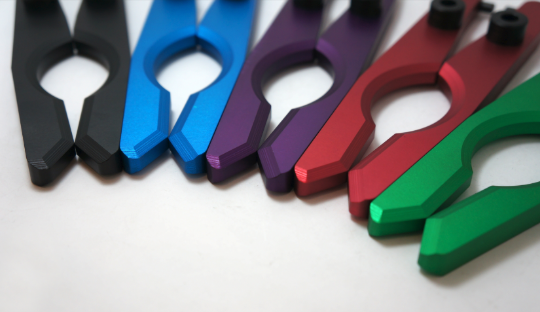
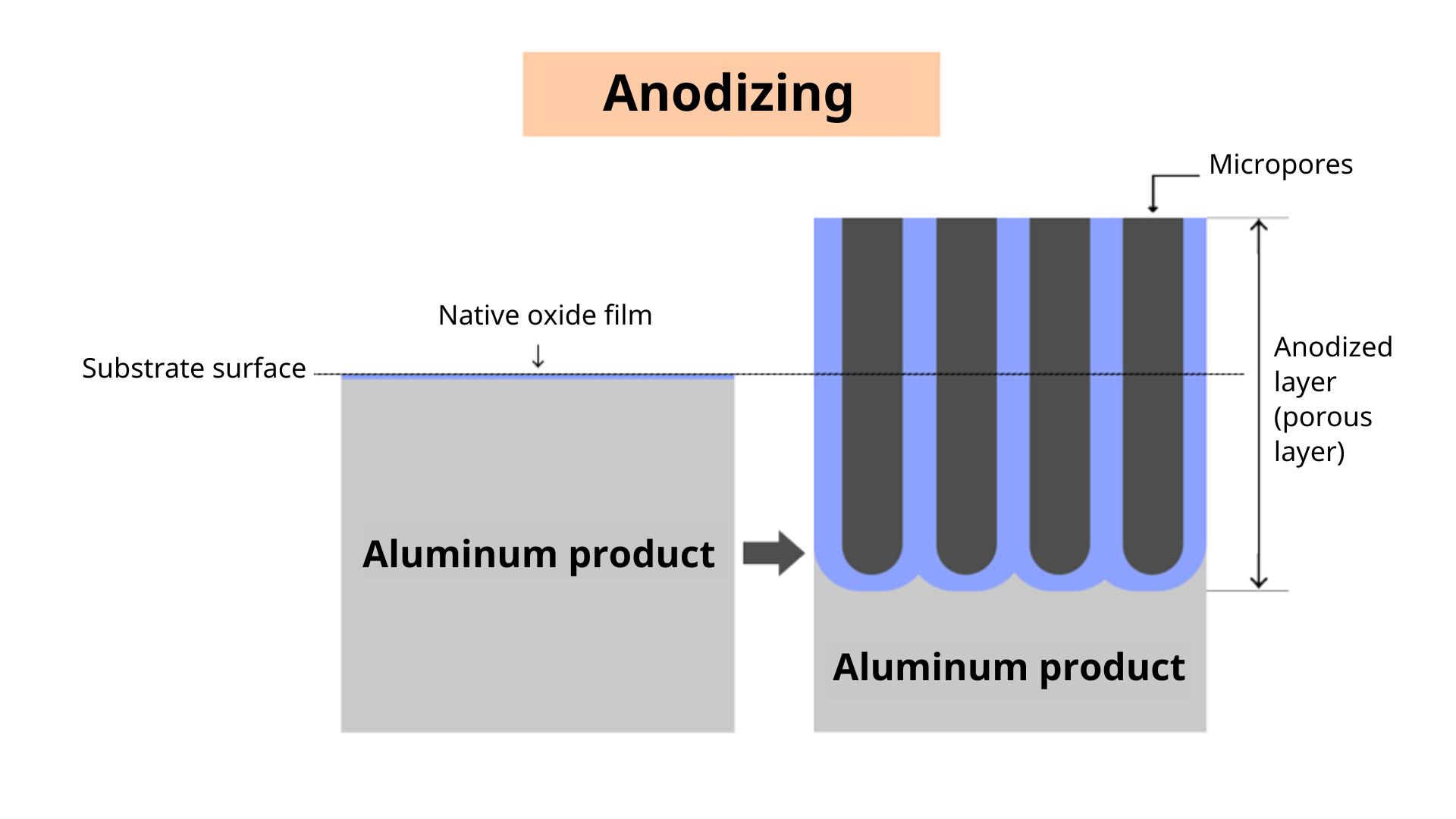
The anodic oxide layer formed during anodizing contains numerous microscopic hexagonal pores. By sealing these pores, the corrosion resistance, durability, and protective performance of the anodized coating can be significantly improved. In addition, dyes can also be introduced into the pores before sealing to create colored anodized finishes – color anodizing.
▼ Rinsing
<Step 6> Drying
Finally, the product is dried and inspected.
Difference between Anodizing and Plating
Plating is often confused with anodizing. However, anodizing does not simply add a coating to the surface. Instead, it forms an oxide layer that grows both above and into the aluminum surface. This oxide layer consists of a growth layer above the surface and a penetration layer within the base material.
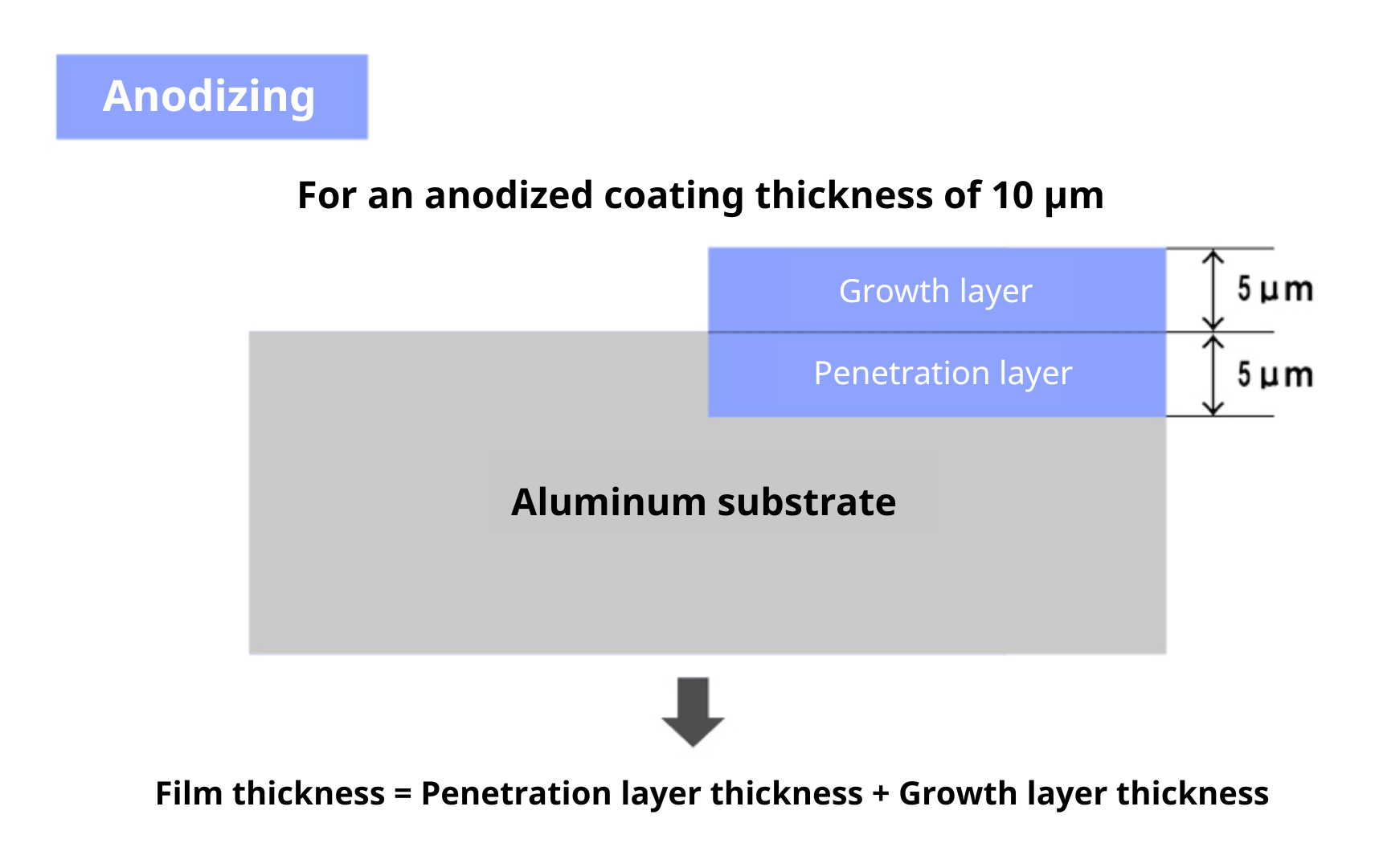
In contrast, plating creates a layer by depositing another metal onto the surface of the base material.
Related article: “Surface treatment basics | Introduction to Plating”
Another key difference between anodizing and plating lies in the electrical setup used during the process. In anodizing, the workpiece is connected as the anode, while in plating it is connected as the cathode.
In simple terms, plating is a process that creates a metal coating on the surface of a product, whereas anodizing is a technique that forms a protective oxide layer both on and within the surface of aluminum.
Types of Anodizing
The following are some of the most common types of Anodizing.
| Type | Film thickness (Min – Max)/μm |
| White Anodizing | 8(5~30) |
| Black Anodizing | 20(10~30) |
| Color Anodizing | 20(10~30) |
| Hard Anodizing | 20(5~50) |
※ Film thickness may vary depending on the aluminum alloy and processing conditions. Therefore, the values shown above are for reference only.
Advantages and disadvantages of Anodizing
In this section, we will explain the advantages and disadvantages of anodizing.
Advantages
1. Improved corrosion resistance
The oxide layer formed by anodizing protects the aluminum surface from corrosion and helps prevent discoloration.
2. Improved wear resistance
Depending on the alloy, the hardness of aluminum typically ranges from approximately Hv20~150. By applying anodizing, the surface hardness can be increased to approximately Hv200 to Hv600, significantly improving wear resistance.
3. Improved electrical insulation
Although aluminum is highly conductive, the anodic oxide layer formed by anodizing provides electrical insulation, preventing the flow of electric currents.
4. Reduced thermal conductivity
Aluminum is known for its excellent thermal conductivity compared with many other metals. However, when aluminum is anodized, thanks to the oxide layer formed on the surface, the thermal conductivity of the anodized surface can decrease to approximately one-third that of bare aluminum.
5. Improved appearance
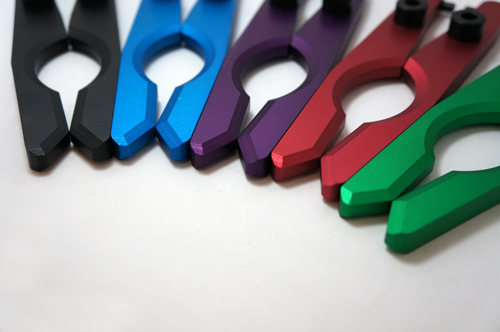
The microscopic pores in the anodic oxide layer can absorb dyes, allowing aluminum to be colored in a wide variety of shades. The color can be selected to meet specific design and application requirements.
Disadvantages
1. Low heat resistance
Anodized coatings have relatively low heat resistance. In environments above 100°C, conventional anodized layers may develop cracks or microcracks.
2. Poor flexibility
The anodic oxide layer is hard but has poor flexibility. It is more susceptible to cracking when subjected to bending, deformation, or impact. When a product is machined after anodizing, the anodic oxide layer may crack or peel.
Conclusion
Selecting the right surface treatment is essential based on the intended application and operating environment of the product. Anodizing is a surface treatment technology that enhances the corrosion resistance, wear resistance, electrical insulation, and decorative appearance of aluminum products.
However, anodizing also has disadvantages, including low heat resistance and poor flexibility. Understanding these characteristics is essential for selecting the most suitable surface treatment and maximizing product performance and lifespan.
Agency Assist Vietnam provide comprehensive services ranging from aluminum material procurement and machining to anodizing, with minimum order quantities starting from just one piece. If you are facing challenges in sourcing parts, please feel free to contact us. We would be happy to assist you with your manufacturing needs.
At Agency Assist Vietnam, our professional sales team handles the entire procurement process on behalf of our customers, providing a convenient and hassle-free experience!
With more than 30 years of procurement experience and a network of more than 100 partner manufactures, Agency Assist Vietnam can source a wide range of parts through a one-stop solution, from preparing materials, processing to surface treatment, helping customers achieve greater efficiency and cost-effectiveness.
We support order from single-piece to low-volume and high-mix production.
All products are inspected by our in-house quality control team before delivery to ensure consistent quality.
Send your drawings Here for a quick quotation.
Explore our machining capabilities for a wide range of processes, including milling and turning here.